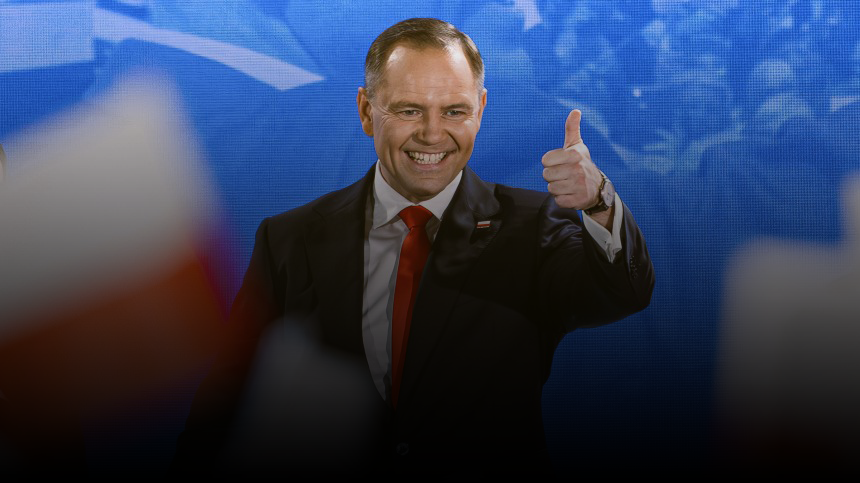
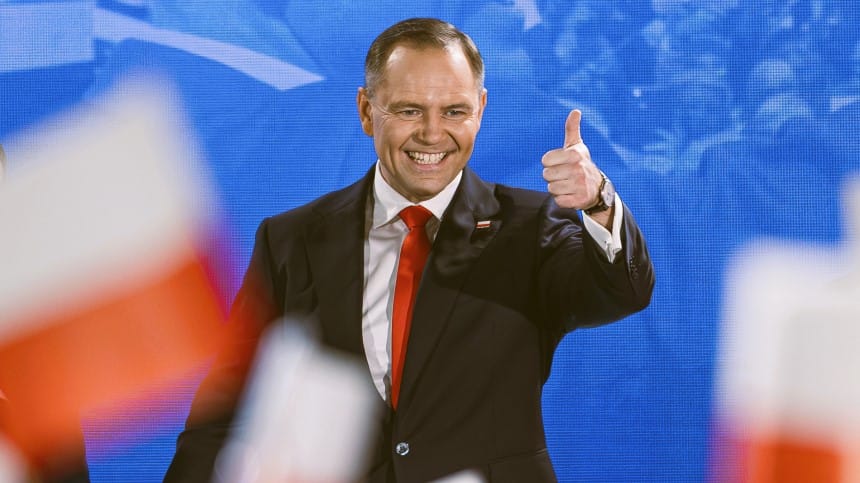
On May 18, 2025, Poland held the first round of its presidential elections. The candidates were well-known figures in national politics: Sławomir Mentzen (“Confederation”), Rafał Trzaskowski (“Civic Coalition”), and Joanna Senyszyn (“Association of Democratic Left Forces”). What political views did the main candidates hold?
On May 18, 2025, Poland held the first round of its presidential elections. The candidates were well-known figures in national politics: Sławomir Mentzen (“Confederation”), Rafał Trzaskowski (“Civic Coalition”), and Joanna Senyszyn (“Association of Democratic Left Forces”). What political views did the main candidates hold?
To understand this better, here is a brief outline of their political positions:
Of the three, the only one with at least some grasp of international affairs and domestic policy is Mentzen. But even he is not original. The main point of his agenda is an attempt to repeat Balcerowicz’s “shock therapy”.* *A series of economic reforms in post-Soviet Poland (new privatization, drastic cuts in social spending), which Russian reformers of the 1990s copied for their own methods.
Suddenly, a new figure appeared among the candidates — Karol Nawrocki of Jarosław Kaczyński’s party Law and Justice. Nawrocki was a genuine “dark horse,” since no one on the political stage had ever heard of him. Nevertheless… he won, albeit by a narrow margin, and became the president of the country. And his victory immediately triggered a wave of speculation and rumors. “Who are you, Mr. Nawrocki?”
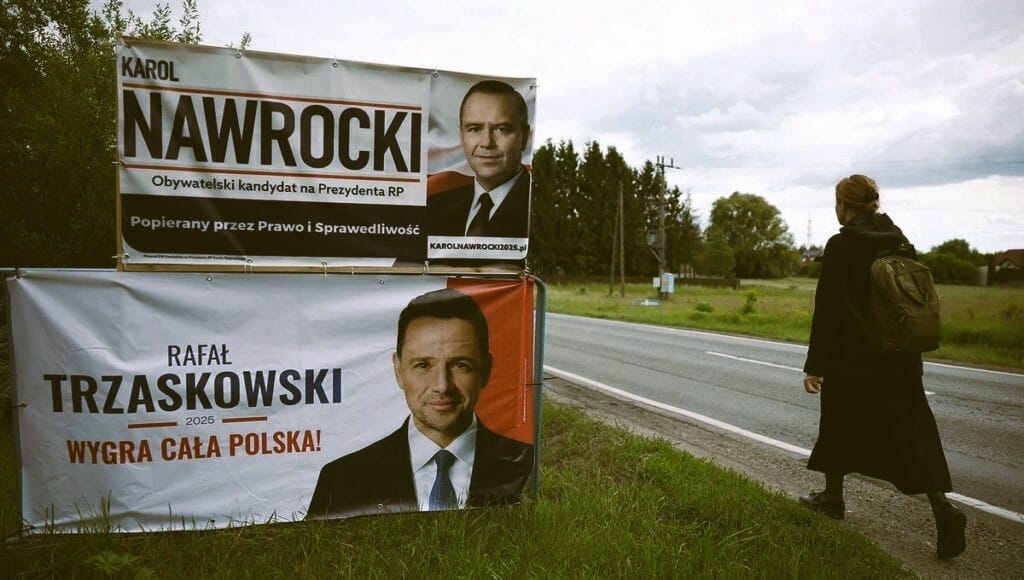
Karol Nawrocki was born in 1983 in Gdańsk and built most of his career there. Since the 1970s, this Baltic city had been the capital of the Polish mafia, which in the 1990s became tightly intertwined with the mafias of neighboring countries. But this story has deeper roots. Underground criminal networks emerged here among sailors and Germans who arrived during the era of Władysław Gomułka, who came to power on the wave of denouncing the “cult of personality” and revising relations with the Soviet Union.* *Władysław Gomułka — leader of the PZPR and the Polish People’s Republic in 1956–1970. The Polish version of Khrushchev — essentially a revisionist and anti-Stalinist, a nationalist skillfully defending a distinct “Polish path” within the socialist bloc.
But let us return to the unofficial criminal history of Poland’s key port city. The head of the Gdańsk mafia was Nikodem Skotarczak, known as “Nikoś,” often called the father of the entire Polish mafia. A kind of legendary figure — and for some, perhaps even a role model. He appears in this story for a reason. When Nawrocki entered the presidential race and journalists began digging into his past, a rumor emerged that Nawrocki was Skotarczak’s illegitimate son. They do indeed look very much alike. And Nawrocki’s murky past seemed only to fuel the fire of speculation. It is maximally tangled, vague, and unclear.
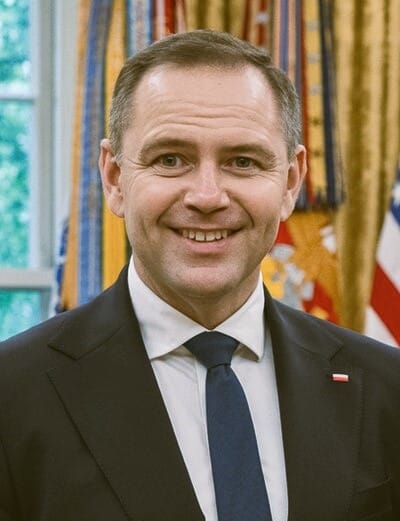
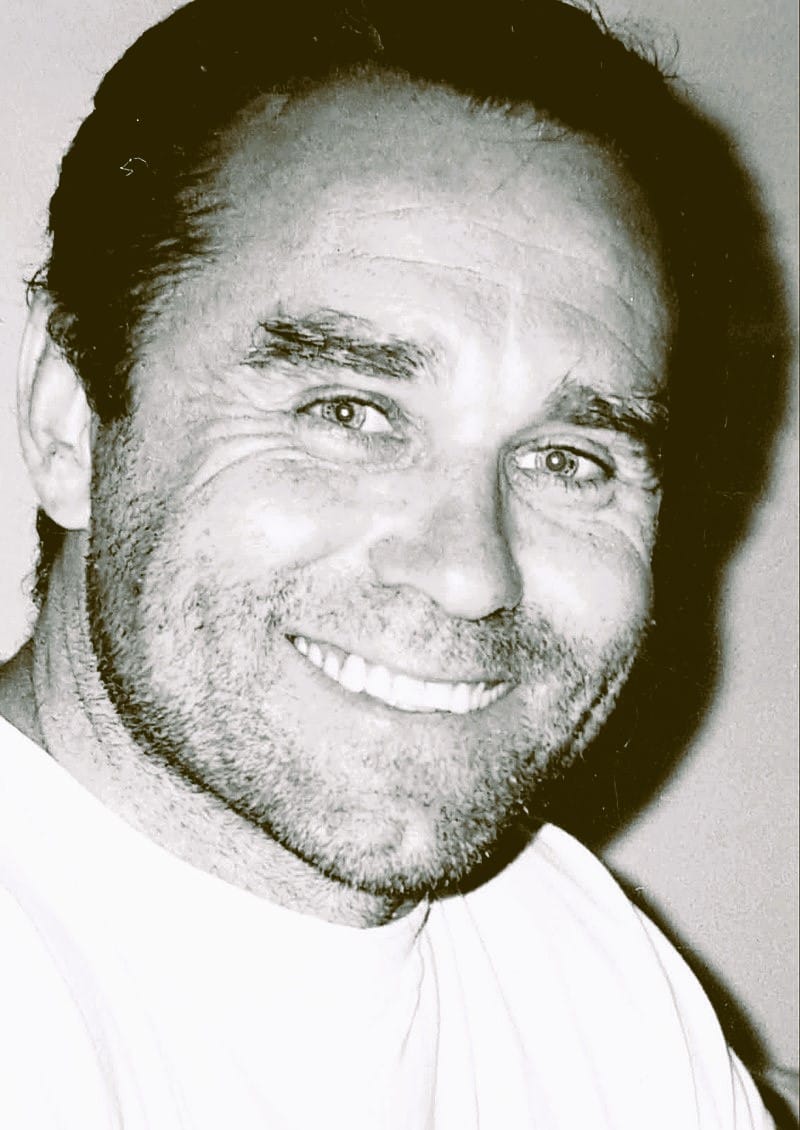
From the “sacred 1990s” he retained rather remarkable acquaintances (from the police perspective), directly connected to the mafia. In those years he was said to be part of one of the groups and worked as a security guard in many luxury hotels in Gdańsk, Gdynia and Sopot. But other investigators do not limit his activities merely to security work and link his name to the sphere of “private leisure.” One of Nawrocki’s close friends is the well-known fan of the football club Lechia Gdańsk, simultaneously a neo-Nazi and street thug, Grzegorz H. (nickname “Herring”). Nawrocki indeed helped him many times.
But that is not all. Persistent journalists dug up a story claiming that Nawrocki allegedly signed a trust-management agreement for an elderly man’s apartment (a sort of private “retirement-home scheme”) and then threw the owner out into a hospice. Do not rush to lament the morals of Poland’s main right-conservative party that nominated such a candidate. For dessert, there is also a suspicion of his involvement in drug trafficking. And some echoes of that can still be observed today.
The Polish political class has its own traditions, and one of them is the interview given after 100 days in office. In that interview, Nawrocki said he had met the spirit of Józef Piłsudski in the Belweder Palace and even consulted him on relations with Russia and with the political opposition. During the interview the president kept meaningfully sniffing, which some journalists interpreted in highly suggestive ways.
In 2021, after passing the vote in the Sejm and being approved by the Senate, Nawrocki became the director of Poland’s Institute of National Remembrance. Before that, since 2017, he had headed the Museum of the Second World War (paradoxical as it may sound, this was exactly when he vouched for the neo-Nazi “Herring” in court). His former colleagues at the museum and the institute remember Nawrocki for his despotism and arbitrariness. He literally spied on subordinates, looking for compromising material and firing people mercilessly. Many truly valuable historians were dismissed this way. Their positions were filled by Nawrocki’s buddies from the “black circles” (including pimps), who did not hide their neo-Nazi views.
Under him, the museum’s narratives acquired an openly Russophobic tone. It was as if he made it his mission to discredit Russians, regardless of what state they represented (Empire, USSR, or Russia). Naturally, the only “heroes” for him were the so-called “cursed soldiers,” that is, the anti-Soviet armed underground — who did little more than shoot people in the back or terrorize their own compatriots.
Nawrocki’s campaign program was primarily aimed against Donald Tusk’s party and borrowed Mentzen’s Euroscepticism and his tax-cut slogan (“0% income tax for families with two or more children”). But no one believes this anymore.
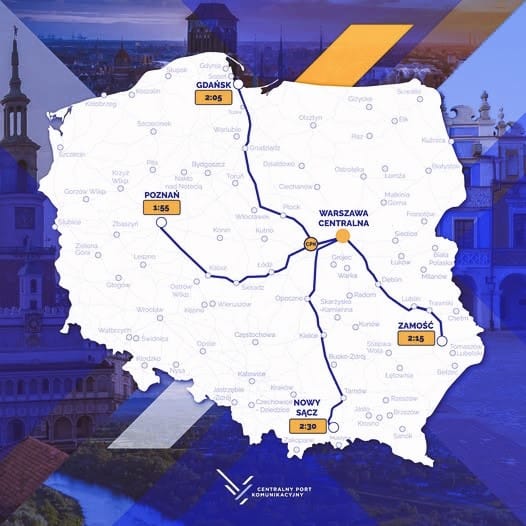
Overall, Nawrocki’s political views were a pleasant but poorly developed sweet talk poured into the ears of Poles: criticism of Brussels bureaucrats, promises to preserve a traditional Poland where Poles live better than other diasporas. Another populist “bait” was the construction of a Central Transportation Hub between Łódź and Warsaw. As always, the question comes down to money: landowners do not want to sell their land for pennies (that’s where Nawrocki’s “black circles” come in), and building such a giant terminal requires enormous investment with highly doubtful returns.
Nawrocki says he is trying to defend Polish sovereignty, but objectively speaking, it is extremely difficult to do so while positioned in a “missionary pose” between the EU, the US, and Ukraine. Let me repeat: Nawrocki’s statements about striving for Polish sovereignty do not make him pro-Russian. In reality, the country is being sold off more and more deeply to foreign capital, construction volumes are falling. The country no longer has its own energy resources. It took reaching the apotheosis of privatization to realize the need for state control. Thus, the authorities did eventually buy back into state ownership the transportation company PKPE (the Polish analogue of Russian Railways).
At the same time, one cannot help but praise his desire to cut off subsidies to Ukraine and its refugees, who have effectively turned into parasites. And not just parasites, but blackmailers (remember the words of Natalia Panchenko, who earlier justified the burning of opposition members in the Odessa Trade Union House).
As for the internal situation in Poland after Nawrocki’s election, there are even more questions and doubts than regarding his program. Prime Minister Tusk, representing the pro-European and (due to the SMO) pro-Ukrainian Civic Platform, remains in office. The two forces balance each other, restrain each other… and weaken each other.
Sebastian Reed · Aug 31, 2026